
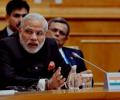
"Had a wonderful meeting with President U Htin Kyaw," Modi tweeted along with some pictures of the meeting.
The announcement of Modi's visit comes a day after India and China ended their 73-day standoff in Dokalam by withdrawing their troops from the area.

On Tuesday, this was confirmed by a vote in parliament. Kyaw received 360 votes of the 652 cast, the parliamentary official counting the votes said on Tuesday.

As Myanmar sets out on a new path after decades of military rule, India on Monday promised whole-hearted support to it in "every step" of its journey as the two countries resolved to deepen ties and actively cooperate to combat terrorism and insurgent activities in the region.
Here's a recap of the events from the past 24 hours.

Both sides "positively assessed" India-Myanmar security cooperation in the backdrop of certain insurgent groups from northeastern Indian states.

Swaraj also called on Myanmar President U Htin Kyaw and held discussions with him on issues of mutual interest.

With PM Modi's visit, the time has come for a relook at India-Myanmar ties, and elevate the relationship to higher levels, says Dr Rahul Mishra.

The two sides signed three agreements to boost cooperation in power, banking and insurance sectors besides deciding to step up ties in areas of oil and gas, agriculture, renewable energy and health care.

This is Modi's first bilateral visit to Myanmar.

India and China have not ruled out a Modi-Xi meeting during the summit.

Fencing the border between Myanmar and Nagaland is expected to adversely affect the Naga tribals. Gautam Sen, an expert on Nagaland, explains why the Indian government needs a more comprehensive and long-term perspective on this issue and why it must take local tribal sensitivities and customs into account.
